

Stress Resilience in Crop Production Research Group - MATE Research
Stress Resilience in Crop Production Research Group

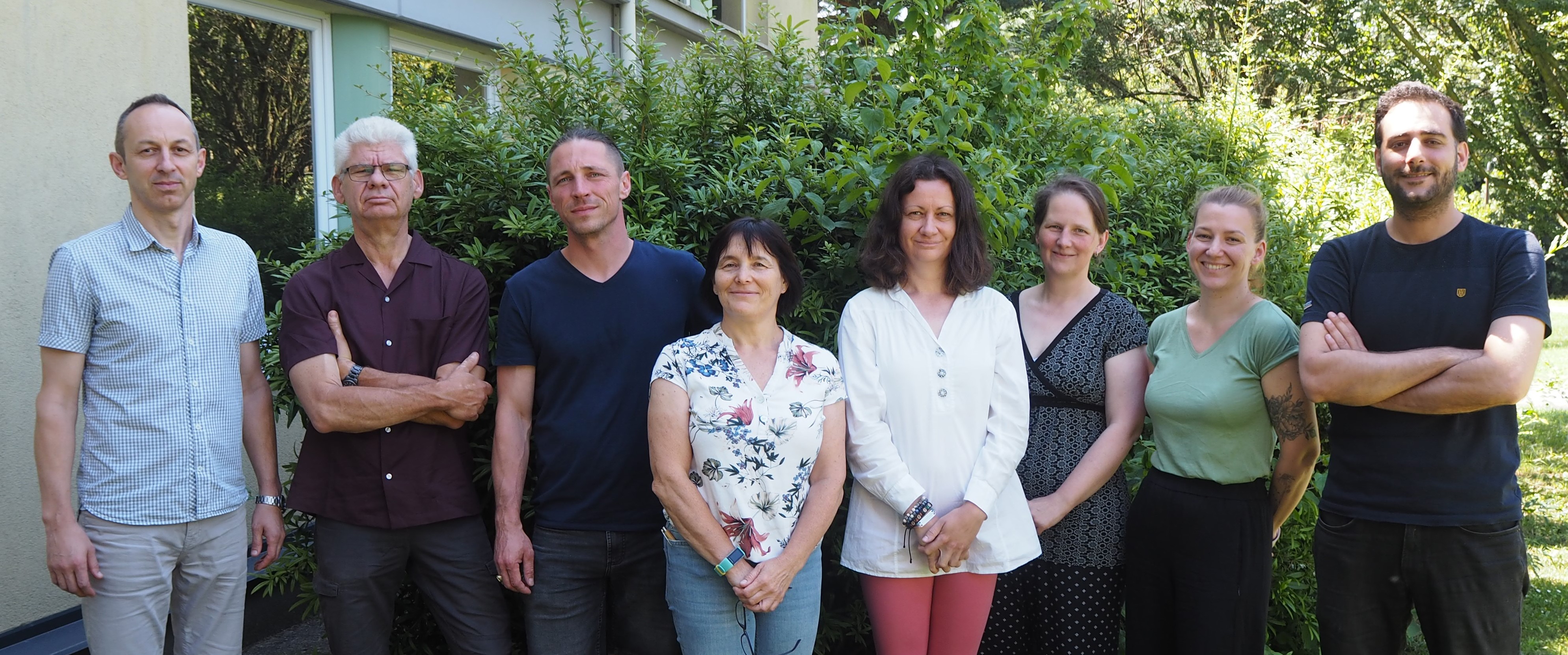
Climate change has an adverse impact on natural habitats and productivity of crops. By employing a multidisciplinary approach including genetic, molecular-biology, biochemical, cytological, and high-throughput sequencing tools, we investigate the mechanistic basis the plant stress responses, to mitigate environmental impacts and enhance productivity and biological fitness. Our research is a collaborative effort of three research groups belonging to the Institute of Plant Protection and Genetics and Biotechnology. We study (i) host-pathogen interaction dynamics and defence/counter-defence strategies in natural populations, (ii) the influence of temperature on virulence and disease development, (iii) transcriptional and post-transcriptional regulatory networks that govern immune and heat responses, and (iv) impact of virus infection, temperature stress or combined stress on plant productivity.
In the Genomics Research Group, we investigate viromes of symptomatic plants and weeds using high-throughput sequencing and identify possible viral suppressor proteins encoded by recently described fruit tree-infecting viruses.
In the Plant Developmental Biology Group, we map the function of the key RNAi regulators in barley using genome editing to produce mutants.
In the Plant Stress Biology Group, we characterise the transcription at the molecular level both at ambient and heat stress temperatures.
Analyses are conducted on herbaceous dicots (A. thaliana, B. napus), woody dicots (V. vinifera and fruit trees), various annual and perennial weeds (monocot and dicot) and on the monocot crop H. vulgare. Our findings contribute to the understanding of complex environmental stress responses, a “hot-spot” of biological research, and accelerate the development of resilient cultivars with significance in the light of global warming to ensure food security.
Leader
 |
Dr. Éva Várallyay
Institute of Plant Protection
Scientific Advisor
Research keywords: virus, grapevine, fruit tree, weed, small RNA, HTS, viromes, VSR
|
Members
 |
Dr. Tibor Csorba
Institute of Genetics and Biotechnology
Senior Research Fellow
Research keywords: heat stress response, crop yield, transcriptional and post-transcriptional control, RNA polymerase II, monocot and dicot models (Hordeum vulgare, Brassicaceae)
|
 |
Dr. Ágnes Dalmadi
Institute of Genetics and Biotechnology
Research Fellow
Research keywords: argonaute proteins, barley, arabidopsis, nicotiana benthamiana, mirna pathway, mirna loading efficiency, heat stress
|
 |
Dr. Zoltán Havelda
Institute of Genetics and Biotechnology
Research Advisor
Research keywords: plant, rna interference, crop improvement, genome editing, agriculture
|
 |
Dr. Nikoletta Jaksa-Czotter
Institute of Plant Protection
Research Fellow
Research keywords: grapevine, fruit tree, rnai, high-throughput sequencing (hts), virus diagnostics
|
 |
Dr. András Kis
Institute of Genetics and Biotechnology
Senior Research Fellow
Research keywords: monocot, transgenic, rnai, crispr, cas9
|
 |
Dr. Zsuzsanna Nagyné Galbács
Institute of Plant Protection
Research Fellow
Research keywords: fruit tree, rnai, high-throughput sequencing (hts), virus diagnostics, weeds
|
 |
Dr. Henrik Mihály Szaker
Institute of Genetics and Biotechnology
Research Assistant
Research keywords: plants, bioinformatics, heat stress, rna biology, transcription regulation, genomics
|
Selected publications resulted from the project
doi.org/10.1093/plcell/koaf256
Szaker HM, Verma R, Szádeczky-Kardoss I, Gál N, Abbas SH, Darkó É, Pettkó-Szandtner A, Silhavy D, Csorba T. (2025) Transcription fidelity and control of alternative splicing contribute to heat stress survival in Arabidopsis. Plant Cell. 2025 Oct 31;37(11):koaf256., D1
doi.org/10.3389/fpls.2025.1659802
Nikoletta Jaksa-Czotter, Emese Demián, Réka Sáray, Katalin Salánki, Éva Várallyay. (2025) Comparative functional analyses of the movement and coat proteins of grapevine Pinot gris virus, encoded by the symptomatic and asymptomatic variants. Front. Plant Sci., 25 September 2025 Sec. Plant Pathogen Interactions Volume 16 - 2025, D1
doi.org/10.1111/tpj.70195
Dalmadi Á, Miloro F, Abdu A, Kis A, Havelda Z. (2025) Remote precursor elements can modulate RNA induced silencing complex-loading efficiency of miR168 in Arabidopsis. Plant J. 025 May;122(3):e70195., D1
doi.org/10.3390/plants14091273
Ismajli, B., Galbács, Z. N., Takács, A. P., & Várallyay, É. (2025). The First High-Throughput Sequencing-Based Study of Viruses Infecting Solanaceous Crops in Kosovo Reveals Multiple Infections in Peppers by Six Plant Viruses. Plants, 14(9), 1273. Q1
doi.org/10.3390/agronomy15010074
Agyemang, E. D., Ofosu, R., Desiderio, F., Galbacs, Z. N., Takács, A. P., & Várallyay, É. (2025). The Occurrence and Diversity of Viruses Identified in Monocotyledonous Weeds. Agronomy, 15(1), 74. Q1
doi.org/10.1016/j.scienta.2024.113820
Francesco Desiderio, Zsuzsanna Nagyné Galbács, Emese Demian, Vivien Fákó, David Czako, Tünde Varga, Daniel Barath, Nikoletta Jaksa-Czotter, Igor Koloniuk, Eva Varallyay. Sweet and sour cherry trees growing at new cultivar testing orchard and certified stock collection in Hungary are highly infected with CVA and PrVF, Scientia Horticulturae, Volume 338 D1
doi.org/10.1007/s00299-024-03345-1
Imtiaz Ahmad, András Kis, Radhika Verma, István Szádeczky-Kardoss, Henrik Mihály Szaker, Aladár Pettkó-Szandtner, Dániel Silhavy, Zoltán Havelda & Tibor Csorba. (2024) TFIIS is required for reproductive development and thermal adaptation in barley. Plant Cell Rep 43, 260, D1
doi.org/10.3390/plants13182664
Galbács, Z. N., Agyemang, E. D., Pásztor, G., Takács, A. P., & Várallyay, É. (2024). Viromes of Monocotyledonous Weeds Growing in Crop Fields Reveal Infection by Several Viruses Suggesting Their Virus Reservoir Role. Plants, 13(18), 2664. Q1